Plus 3 low-lift habits shown to support brain health for desk-bound executives
Hola amigos,
I’ve got to admit, I’m pretty proud of this new upgrade I made to my remote work setup, don’t laugh!
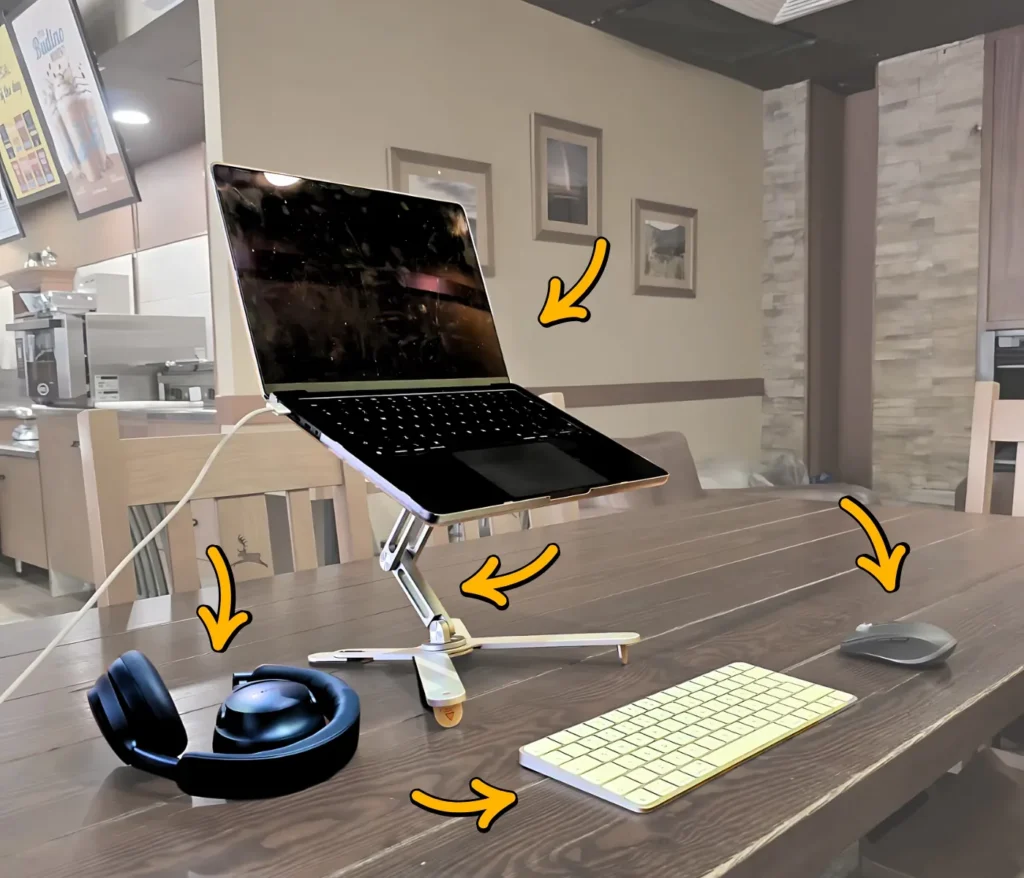
I’ve had enough of the curious stares from strangers when they see my NASA-like workstation for my “WFH” routine. And let’s not forget the neck pain I’ve been dealing with—during one of my stretching sessions, it sent an electric jolt straight to my brain.
But today’s the day that all changes. So grab a coffee, bookmark this, save it—whatever you need to do—but don’t just skim through.
Let’s dive in.
1. Improve Cholesterol with Vitamin E
Managing blood lipids like cholesterol is critical in preventing heart disease, particularly for those with diabetes.
A recent study shows that Vitamin E can play a role in improving lipid profiles, lowering LDL (bad cholesterol) and increasing HDL (good cholesterol).
If you are at risk or managing diabetes, consider adding Vitamin E to your daily routine. This is important because controlling blood sugar levels and stabilizing lipids reduces the risk of cardiovascular disease.
Foods Rich in Vitamin E
All values are Vitamin E content per serving:
- Cod liver oil – 7.7 mg
- Sunflower seeds – 6.2 mg
- Almonds – 6.0 mg
- Salmon – 5.5 mg
- Hazelnuts – 4.7 mg
- Peanuts – 3.3 mg
- Olive oil – 2.5 mg
- Broccoli – 2.4 mg
- Spinach – 2.4 mg
- Shrimp/prawns – 3.2 mg
- Avocado – 2.0 mg
- Butternut squash – 1.9 mg
2. The Exact Workout to Improve Your REM Sleep
Strength training is a game-changer, not just for muscle-building but also for improving sleep. This workout is specifically structured to support your circadian rhythm, stabilize blood sugar, and boost mental clarity.
Workout Breakdown (30-40 minutes)
Block 1: Mobility (5 minutes)
The aim is to reduce stiffness and improve flexibility to prevent injury.
1. Cat-Cow Stretch (1 minute)
How to Perform: Start on all fours. Inhale and drop your belly towards the floor while lifting your chest and tailbone (Cow). Exhale and round your back, tucking the chin towards the chest (Cat).
Time: 30 seconds each way.
2. Thoracic Spine Rotation (1 minute)
How to Perform: Start in a kneeling position or seated, place one hand behind your head, and rotate your upper body towards the ceiling, bringing your elbow up. Hold for 2-3 seconds at the top, then return.
Time: 30 seconds per side.
3. Hip Flexor Stretch (1 minute)
How to Perform: Step into a lunge, lowering your back knee to the floor. Push your hips forward and engage your glutes, feeling a stretch in the hip flexors.
Time: 30 seconds per side.
Block 2: Resistance Training (20-25 minutes)
Format: Super-sets (perform two exercises back-to-back with minimal rest in between, followed by a 60-second rest).
Super-set 1: (Squat & Push-Up)
Squats (Bodyweight or Weighted)
How to Perform: Stand with feet shoulder-width apart. Lower your body by bending your knees, keeping your chest up and back straight. Push through your heels to stand back up.
Time: 45 seconds of work.
Rest: 15 seconds.
Push-Ups
How to Perform: Hands placed slightly wider than shoulder-width, lower your body to the ground while keeping your body straight, then push back up.
Time: 45 seconds of work.
Rest: 15 seconds.
Rest 60 seconds before moving to the next super-set.
Super-set 2: (Lunges & Planks)
Lunges (Bodyweight or Weighted)
How to Perform: Step forward with one leg, bending both knees to 90 degrees, keeping your torso upright. Push off the front foot to return to standing. Alternate legs.
Time: 45 seconds of work.
Rest: 15 seconds.
Plank (Knee or Standard)
How to Perform: Hold a plank position, either on your knees or toes, keeping your core tight, and maintaining a straight line from head to heels.
Time: 45 seconds of work.
Rest: 15 seconds.
Rest 60 seconds before moving to the next super-set.
Super-set 3: (Bodyweight Rows & Glute Bridges)
Bodyweight Rows (using a TRX or under a bar)
How to Perform: Grab a bar or TRX handles, lean back with arms extended, then pull your body up towards the bar or handles while keeping your elbows close to your body. Slowly lower back down.
Time: 45 seconds of work.
Rest: 15 seconds.
Glute Bridges (Bodyweight)
How to Perform: Lie on your back with knees bent and feet flat on the floor. Lift your hips toward the ceiling, squeezing your glutes at the top, then lower back down.
Time: 45 seconds of work.
Rest: 15 seconds.
Block 3: Cool-Down with Hoffman Breathing (5 minutes)
Goal: Regulate the CNS and calm the nervous system after an intense workout.
Hoffman Breathing Technique
How to Perform:
- Sit in a comfortable position with your spine straight.
- Take a deep breath in through your nose for 4 seconds.
- Hold the breath for 4 seconds.
- Exhale slowly through your mouth for 6 seconds.
- Pause and repeat the cycle 5 times.
This controlled breathing helps lower cortisol levels, reduces stress, and regulates your central nervous system, facilitating better sleep and recovery after the workout.
That’s it for today amigos,
Hasta la vista!
Sources & References
(As a Data-Driven practitioner, every piece of advice is rooted in current science. Here are the key studies supporting the claims made in this newsletter.)
1. Improve Cholesterol with Vitamin E
Lipid Profile Improvement (Vitamin E): Kim, E., et al. (2018). “Tocotrienol-Rich Vitamin E Improves Lipid Profiles and Glycemic Control in Subjects with Type 2 Diabetes Mellitus: A Randomized Controlled Trial.” Nutrition and Metabolism, 15(1).
2. The Exact Workout to Improve Your REM Sleep
Exercise and Sleep Quality: Kelley, G. A., & Kelley, K. S. (2017). “Exercise and sleep: a systematic review of the randomized controlled trials.” Current Sleep Medicine Reports, 3(1), 22-29.
Blood Sugar & Insulin Sensitivity: Hall, S. P., et al. (2013). “The effect of acute resistance exercise on postprandial blood glucose, insulin, and energy expenditure in middle-aged men.” Journal of Applied Physiology, 115(5), 585-594.
3. Cool-Down with Hoffman Breathing
CNS Regulation & Stress Reduction: Jerath, R., et al. (2012). “Physiology of long pranayamic breathing: Neural respiratory elements may provide a mechanism that explains how slow, deep breathing shifts the autonomic nervous system.” Medical Hypotheses, 78(4), 521–529.